This course builds data governance and quality management capabilities for research professionals. Learners will develop skills in applying metadata tagging for effective data governance and evaluating data quality against defined standards. Through practical application, learners will build the technical capabilities needed to implement robust data management practices that ensure information integrity and accessibility.

Govern and Evaluate Research Data Quality
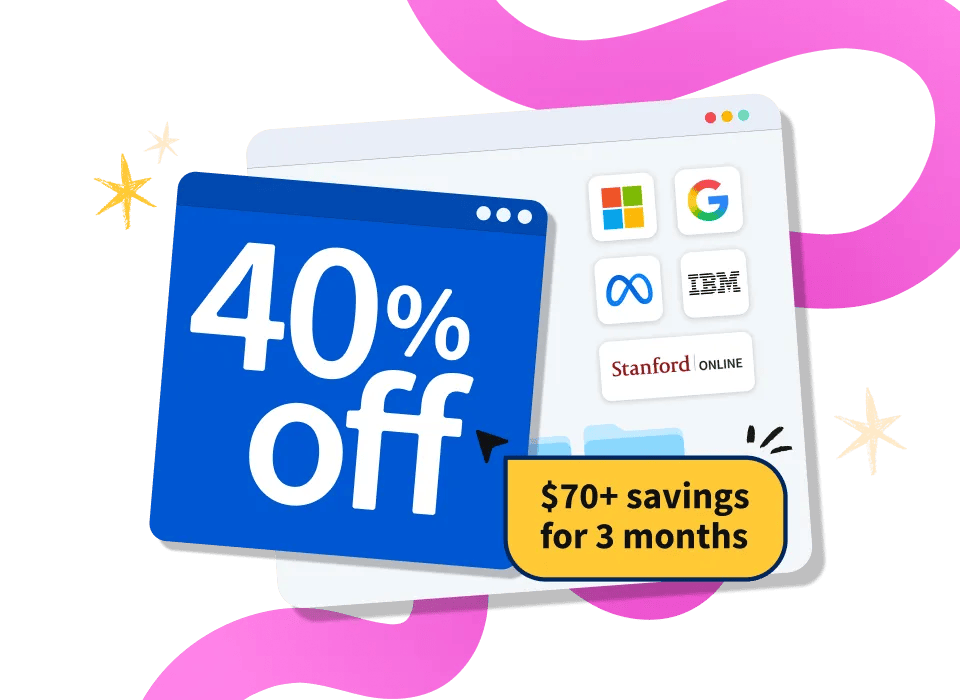
Labor Day starts with $70+ in savings on Coursera Plus. Save 40% for 3 months.

Govern and Evaluate Research Data Quality
This course is part of multiple programs.

Instructor: Professionals in the Industry
Included with Learn more
Ask Coursera
Gain insight into a topic and learn the fundamentals.
Beginner level
Recommended experience
2 hours to complete
Flexible schedule
Learn at your own pace
What you'll learn
Master market forecasting and trend analysis. Learn to use historical data to predict demand and evaluate the strategic impact of emerging trends.
Details to know

Shareable certificate
Add to your LinkedIn profile
Taught in English
See how employees at top companies are mastering in-demand skills

Build your subject-matter expertise
This course is available as part of
When you enroll in this course, you'll also be asked to select a specific program.
- Learn new concepts from industry experts
- Gain a foundational understanding of a subject or tool
- Develop job-relevant skills with hands-on projects
- Earn a shareable career certificate

There are 2 modules in this course
Earn a career certificate
Add this credential to your LinkedIn profile, resume, or CV. Share it on social media and in your performance review.
Instructor
276 Courses45,757 learners
Offered by

Explore more from Business Strategy

University of California, Davis

The University of North Carolina at Chapel Hill
Why people choose Coursera for their career

Felipe M.
Learner since 2018
"To be able to take courses at my own pace and rhythm has been an amazing experience. I can learn whenever it fits my schedule and mood."

Jennifer J.
Learner since 2020
"I directly applied the concepts and skills I learned from my courses to an exciting new project at work."

Larry W.
Learner since 2021
"When I need courses on topics that my university doesn't offer, Coursera is one of the best places to go."

Chaitanya A.
"Learning isn't just about being better at your job: it's so much more than that. Coursera allows me to learn without limits."


¹ Some assignments in this course are AI-graded. For these assignments, your data will be used in accordance with Coursera's Privacy Notice.